
How to write your wedding vows: keep it short, keep it heartfelt
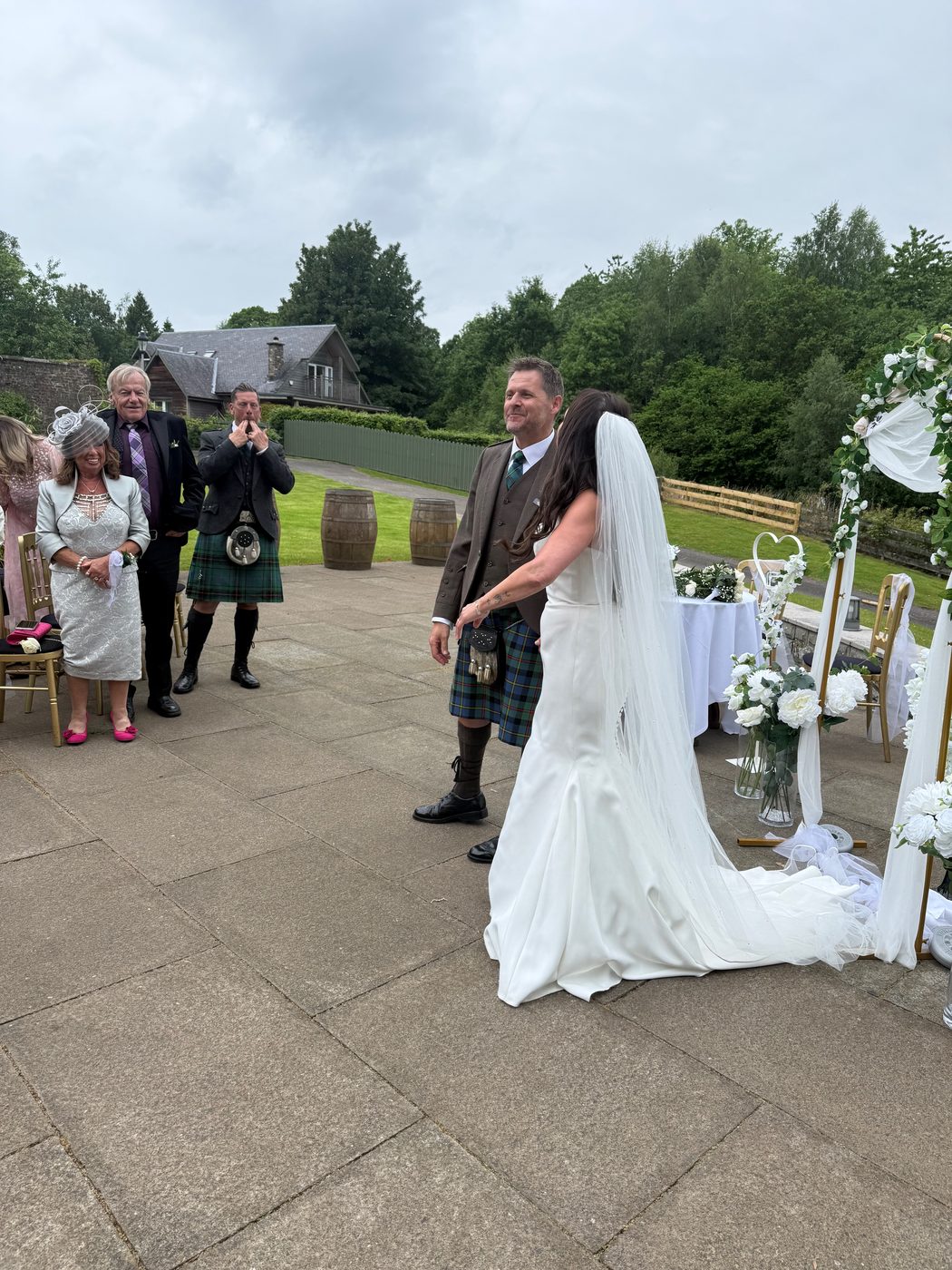
I've stood beside hundreds of couples at the exact moment the vows begin, close enough to see the paper shaking. So believe me when I tell you the two rules that separate the vows people remember from the vows people survive: keep it short, and keep it heartfelt. Everything else in this guide is just those two rules wearing different outfits.
Short is not a compromise — it's the craft
The best vows I've ever heard were under a minute each. Thirty to sixty seconds: three or four sentences that actually mean something, spoken slowly enough to land. Long vows don't read as more love — they read as nerves, and somewhere around the second paragraph your beloved stops absorbing and starts worrying about you. One page of A4 in big type is the absolute ceiling. If you're cutting things you like, good — that's how you know the bit that's left is the bit that matters.
Heartfelt beats clever, every single time
You are not writing poetry; you're making promises to one person while lucky witnesses listen in. The formula that never fails has three moves: what you love about them (be specific — not "your kindness" but the thing they actually do), what you promise (real promises, kept-on-a-wet-Tuesday promises: I'll always charge your phone, I'll never let you go to the airport hungry), and one line for forever — the sentence you'd want them to remember in fifty years. One laugh and one lump in the throat per set of vows is the perfect ratio. And write them separately, then let me read both — I'll never share them across, but I will make sure one of you isn't turning up with a sonnet while the other brought three knock-knock jokes.
Hate speaking in public? I've got you
Here's the bit couples are always relieved to hear: you don't have to make a speech. If reading aloud in front of a room is your nightmare, we use the repeat-after-me approach — I say your vows a short phrase at a time, and you repeat them to your partner. All you have to do is look at the person you love and say a few words at a time; I carry the rest. Nobody in the room thinks it's lesser — in fact it often lands harder, because you're looking at each other instead of at a trembling bit of paper. There's a middle path too: write personal vows for just the two of you (read privately that morning, or over a quiet drink the night before), and keep the spoken part in the ceremony simple. Your vows, your volume.
The read-aloud test
Whatever you write, read it out loud before the day — to the mirror, the dog, the steering wheel. If a sentence trips your tongue in the kitchen, it will trip it in front of ninety people. And bring them printed by me, in big type, on card — phones die, and nobody wants their vows interrupted by a notification. If you're stuck for a starting point, my couples get example vows and prompts when we plan the ceremony — plus as many drafts as it takes. While you're thinking about words, my guide to wedding readings makes a good companion.
Want a hand with your vows? It's my favourite part of the job — from full drafts to repeat-after-me. Tell me your date and we'll find your words together.
Check my date