
What actually happens at a humanist wedding in Scotland?
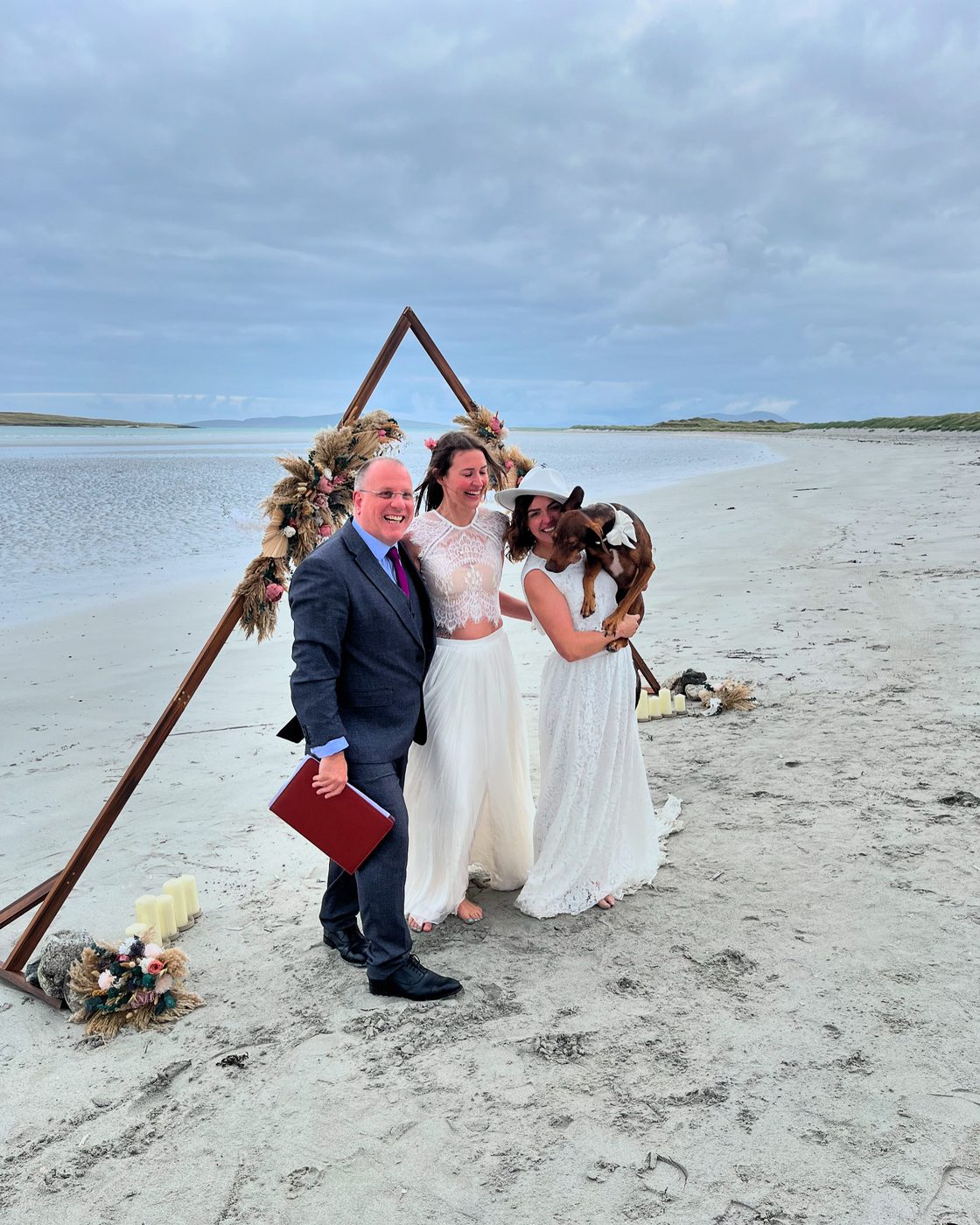
Somebody asks me this at almost every wedding — usually a guest, usually about ten minutes after the ceremony, usually along the lines of "that was brilliant, but was it… legal?" So let's settle it properly: yes. Since 2005, humanist weddings have been fully legally binding in Scotland, no registry office visit required. Humanist weddings now outnumber church weddings in Scotland — and once you've been to a good one, you understand why.
It starts months before the day
The ceremony you hear on the day is the end of a much longer conversation. We meet — in person or over a call — and I ask the questions nobody else asks: how you met, what made you stay, what you argue about in supermarkets, who said "I love you" first and how badly they fumbled it. Then I go away and write. Not a template with your names dropped in — a ceremony written from scratch, in your voices, that your pals will recognise as unmistakably you.
On the day: no pews, no formality you didn't choose
A humanist ceremony can happen anywhere in Scotland — a castle, a distillery, a clifftop, a beach on North Uist, your mum's back garden. There's no set script and no required order. Most ceremonies run twenty to thirty minutes and hold three things at their heart: your story, told well (expect laughter — it's allowed, encouraged even); your vows, which we write together and which can be anything from poetic to gloriously daft; and the legal words, the short declarations that make it official.
The bits people love
Many couples weave in a handfasting — the old Scottish tradition of tying the couple's hands with ribbon or tartan, where "tying the knot" comes from. Others include a quaich (a shared dram from a two-handled cup), candle lighting, or readings from the people they love. None of it is required. All of it is welcome. The only rule is that it means something to the two of you.
The paperwork, made painless
You give notice to the registrar in the district where you're marrying (the M10 form, at least 29 days ahead), the registrar issues the Marriage Schedule, and on the day you, your witnesses and I sign it — that's the moment in all the photos where everyone's grinning over a fountain pen. Signed schedule goes back to the registrar, and you're married. I walk every couple through each step, so nothing sneaks up on you.
Planning a wedding in Scotland? Tell me your date and your venue — or your best guess at either — and let's have a blether about the ceremony you actually want.
Check my date