
How to choose a Scottish humanist celebrant
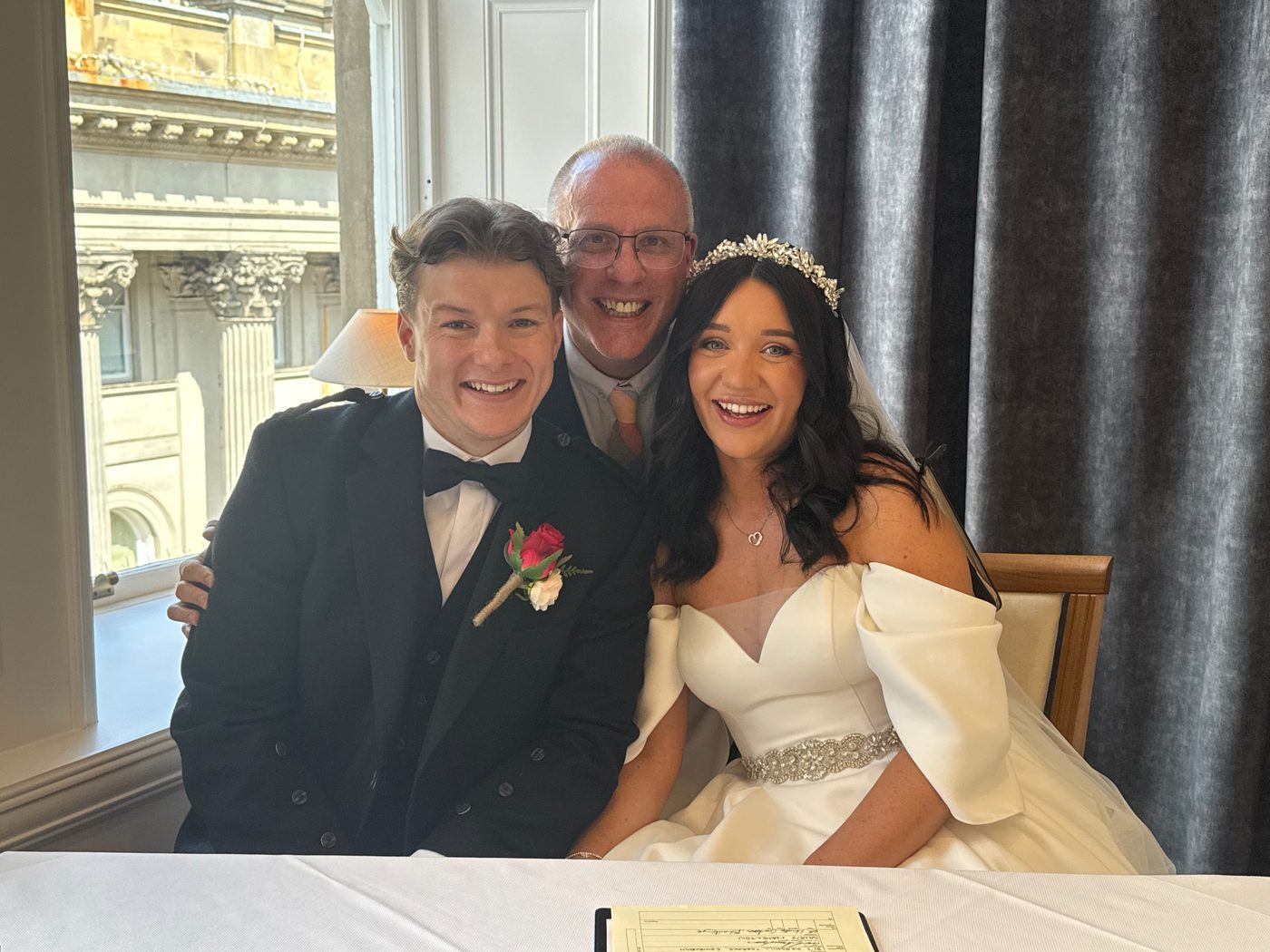
Your celebrant is the only supplier who stands beside you at the actual moment you get married. The flowers frame it, the band soundtracks it — but the ceremony is the wedding, and the person leading it shapes how it feels. So choosing a Scottish humanist celebrant deserves more than a quick scroll. Here's what I'd tell a pal to look for — including the things I'd want to know even if they weren't booking me.
First: check they can actually marry you
In Scotland, humanist weddings are legally binding — but only when the celebrant is authorised to solemnise marriages. The most established route is through Humanist Society Scotland, whose celebrants are trained, insured, and authorised for legal weddings anywhere in the country. I'm an HSS celebrant myself, and it matters for a plain reason: it means the ceremony we build is the real, legal thing — no separate registry office appointment, no paperwork surprises. Whoever you choose, ask the question straight: "Are you authorised to conduct legal marriages in Scotland?" A good celebrant will love that you asked.
Then: find the storyteller, not the script-reader
The difference between a fine ceremony and one your guests talk about for years is whether it was written for you or filled in around you. Ask any celebrant you're considering: How do you get to know us? Will you write our ceremony from scratch? Can we read it before the day? My answers, for the record: at length over a cuppa, always, and every single word. If a celebrant can't tell you how your story becomes the ceremony, keep looking.
Chemistry beats everything
Have a call or a coffee before you book. You're going to share the most emotionally loaded twenty minutes of your life with this person — you should genuinely like them. Do they make you laugh? Do they listen more than they talk? Could you imagine them holding the room when your gran's crying and your best man's about to? That instinct is data. Trust it.
The practical bits
Book early — the good celebrants go fast, and summer Saturdays go first; a year ahead isn't unusual, though it's always worth asking about a date whatever the notice. Confirm what's included: planning meetings, unlimited drafts, travel, a rehearsal if you want one, and guidance through the legal steps — giving notice to the registrar with the M10 forms at least 29 days out, and the signing of the Marriage Schedule on the day. And ask about traditions: if you want a handfasting, a quaich, or something nobody's done before, your celebrant should light up at the idea.
Want to see if we click? That's exactly how I start — a relaxed blether, no obligation. Tell me your date and let's talk about the ceremony you actually want.
Check my date