
Humanist vs civil ceremony in Scotland: what's the difference?
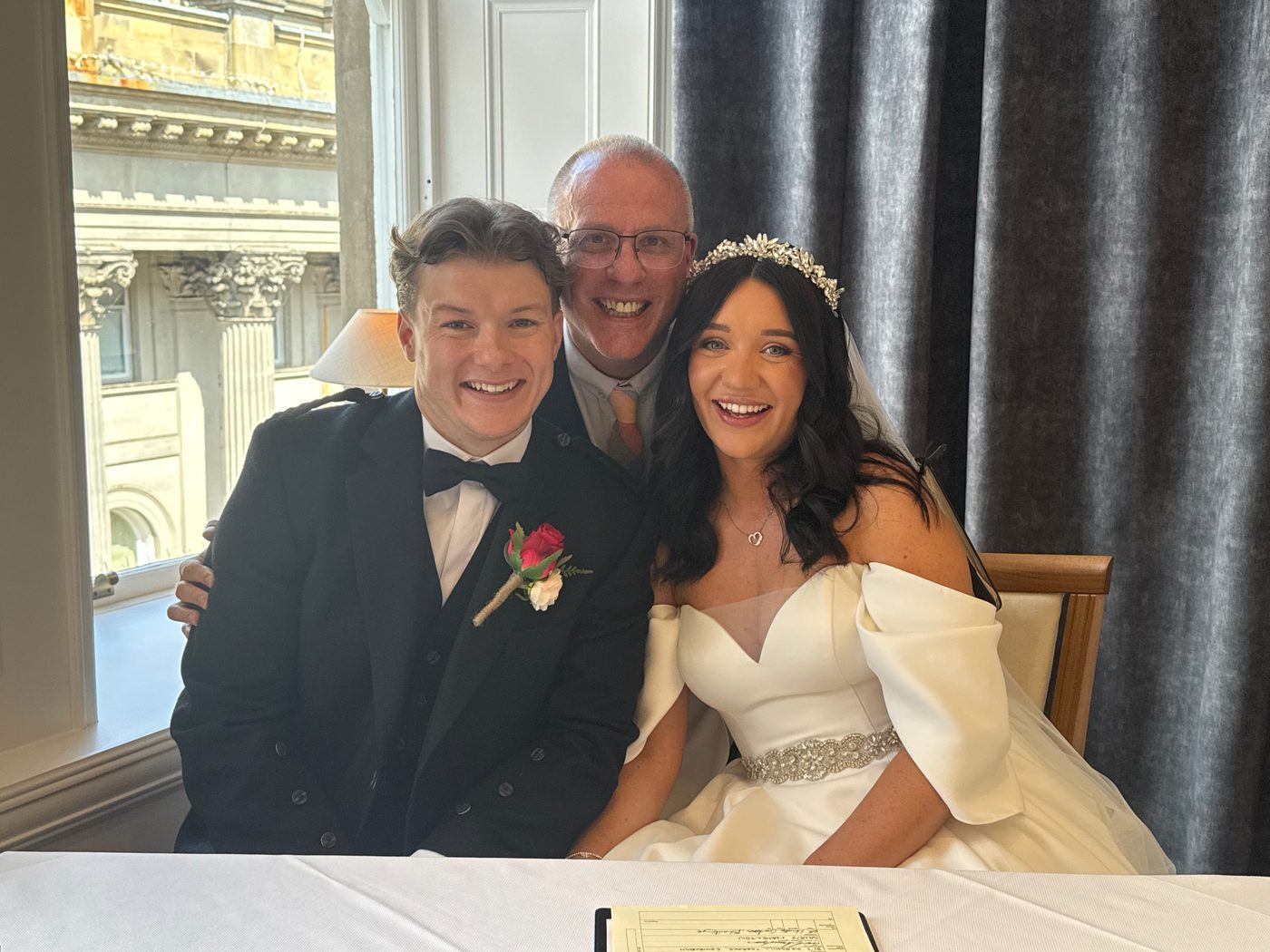
Couples ask me this all the time, usually with a slightly guilty look, as if they should already know. You shouldn't — the two get muddled constantly, even by venues. Both are fully legal in Scotland. Both are non-religious. Both end with you married. The differences are in who leads it, where it can happen, and how much of you ends up in it.
Who's standing in front of you
A civil ceremony is led by a council registrar — a professional doing an important job well, but one you'll typically meet briefly, and who may be doing several ceremonies that day to a broadly standard format. A humanist ceremony is led by a celebrant you chose — someone who has spent months getting to know you, has written every word of the ceremony from scratch, and by the day feels less like an official and more like a pal who happens to be able to marry you. That relationship is the single biggest difference, and it's the one your guests can feel from the front row.
Where — and when — you can marry
Civil ceremonies happen at registration offices or venues arranged through the council, within the registrars' working diary. A humanist ceremony can legally happen anywhere in Scotland, any day, any time: a beach on North Uist, a Glasgow tenement garden, the summit of a hill your grandad loved, your own living room. If the place means something to you, we can marry you there — no special licence for the venue required.
What the ceremony can hold
Civil ceremonies follow a set legal structure and can't include religious content; the room for personalisation is real but bounded. A humanist ceremony is built entirely around your story — the vows you actually want to make, readings from your favourite people, laughter encouraged, and any tradition you fancy, from a handfasting to a quaich to something entirely your own invention. The legal declarations sit inside a ceremony that's unmistakably yours.
The honest bottom line
If the ceremony is a formality on the way to the party, a civil ceremony does the job with no fuss, and there's no shame in that. But if you want the ceremony to be the bit people remember — the twenty minutes your gran quotes back to you at Christmas — that's what a humanist ceremony is for. On cost, they're closer than you'd think once weekend and venue fees are compared: I've broken the numbers down in what a humanist wedding actually costs.
Still weighing it up? Ask me anything — no hard sell, just straight answers from someone who's stood at the front of a lot of weddings.
Check my date